Nearly a decade after Miami first began weighing how to modernize the aging marina facilities on Virginia Key, voters will decide this November whether to advance a plan that would redevelop the Rickenbacker and Marine Stadium marinas into a more publicly accessible waterfront destination.
The proposal, centers on a roughly 27-acre site on Virginia Key that includes the Rickenbacker and Marine Stadium marina properties. The project would be led by Virginia Key LLC, a joint venture between RCI Group and Suntex Marinas, under a long-term lease with the City of Miami if approved by voters.
Also read: Ocean One Breaks Ground in Boynton Beach · Royale Pizza Napoletana Opens in Miami Beach This Fall
According to the proposal, the redevelopment would replace aging infrastructure, expand access to Biscayne Bay, add public waterfront amenities and preserve city ownership of the land. The plan is being framed as both a marina modernization effort and a broader public access project for residents, boaters and visitors.
| Project Detail | Information |
|---|---|
| Project Name | Rickenbacker and Marine Stadium Marinas redevelopment |
| Location | Virginia Key, Miami |
| Site Size | Approximately 27.62 acres |
| Developer / Operator | Virginia Key LLC, a joint venture of RCI Group and Suntex Marinas |
| Public Vote | Miami referendum on the November ballot |
| Proposed Lease Term | 45 years, with two 15-year renewal options |
| Private Investment | More than $80 million |
| Planned Marina Program | 750 dry slips and 202 wet slips |
| Public Benefit | Waterfront promenade, public gathering areas, dining, recreation access and landscaped open space |
What the Virginia Key marina proposal includes
The plan calls for a modernized marina complex with upgraded boater services, indoor hurricane-rated dry storage, improved pedestrian areas and expanded waterfront access. Virginia Key LLC says the redevelopment would include more than 1,200 linear feet of landscaped waterfront promenade, along with areas for walking, running, biking and paddling.
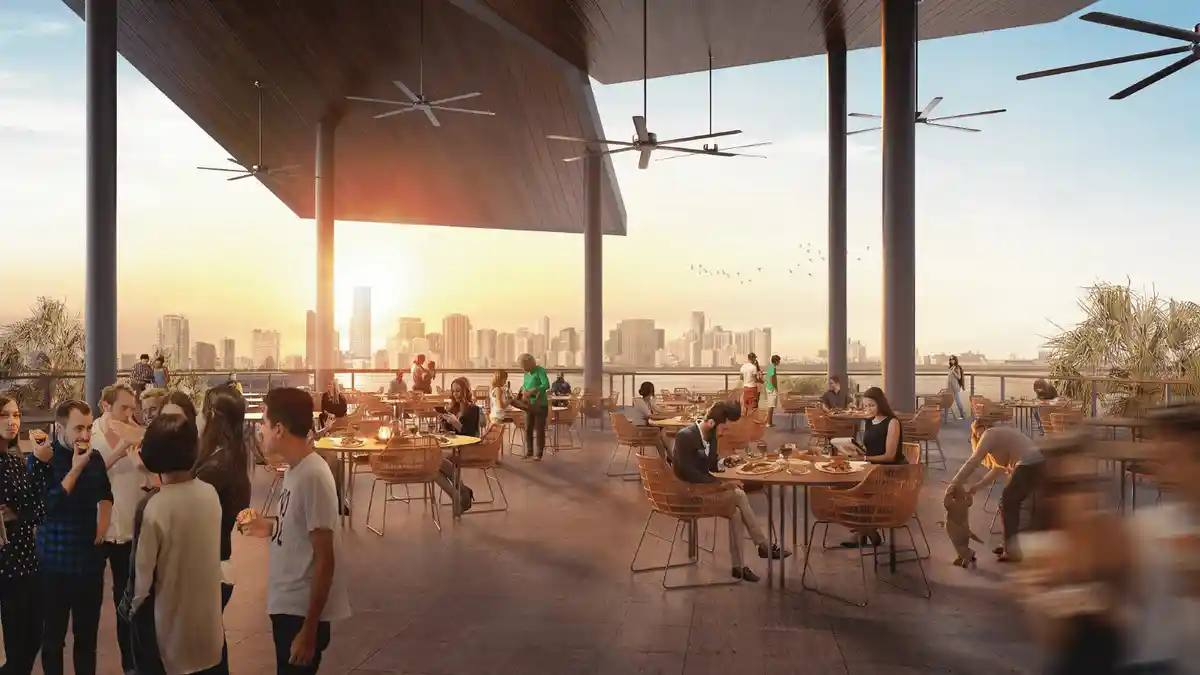
The proposal also includes additional waterfront dining options and public gathering space. According to the project description, the idea is to make the shoreline usable by more than just marina tenants, with opportunities for residents and visitors to spend time along Biscayne Bay even if they do not own a boat.
The marina program would feature 750 dry slips and 202 wet slips, along with improvements to replace older facilities. The team says the project would also pursue Florida Clean Marina designation and LEED certification, reflecting a combination of environmental and resiliency goals. LEED, short for Leadership in Energy and Environmental Design, is a widely used green building rating system.
How the project reached the ballot
The redevelopment has been under discussion for years. According to PROFILEmiami’s reporting, the City of Miami first issued a public request for proposals in 2017 seeking a new operator and developer for the property. A selection committee ranked Virginia Key LLC as the top proposer, and the city manager approved that recommendation.
The proposal later became tied up in litigation. The article says the courts ultimately ordered the city to place the plan before voters, and a Miami-Dade Circuit Court judge recently rejected an attempt by the current operator of Rickenbacker Marina and others to stop the referendum from moving forward.
That history helps explain why the project is now headed to a public vote rather than a standard administrative approval process. The referendum language asks voters to authorize a lease of approximately 27.62 acres on Virginia Key to Virginia Key LLC under the terms outlined in the ballot.
Who is behind Virginia Key LLC
Virginia Key LLC is a partnership between RCI Group and Suntex Marinas. The companies say they bring extensive marina ownership and operating experience, including in South Florida.
RCI Group, led by Robert Christoph Sr. and Robert Christoph Jr., is described in the article as a family-operated firm with more than 50 years in business. The company has focused on residential, commercial and marine properties and has operated in Florida for decades. Robert Christoph Jr. said the project would create more open access to Biscayne Bay and help transform what he described as an underutilized public asset.
Suntex Marinas, meanwhile, is one of the nation’s larger marina owners and operators, with a substantial Florida portfolio. David Filler of Suntex said the company sees Virginia Key as an opportunity to create a more accessible waterfront destination while keeping the marina itself at the center of the project.
Both firms have worked on or operated other marina assets in South Florida, which the developer says strengthens its case for handling a larger, long-term public lease. The proposal also emphasizes that the city would retain ownership of the land even if the lease is approved.
Financial terms and city revenue projections
If voters approve the referendum, Virginia Key LLC would enter a 45-year lease with the City of Miami, with two 15-year renewal options. The proposal would require a minimum annual guaranteed rent of $2.2 million, with escalations over time.
The article states that the city would also receive 6 percent of gross revenues generated by the redeveloped marinas. Under the developer’s projections, that would bring annual rent to about $3.8 million, more than double the current rent and more than six times the current operator’s base rent.
Over the initial 45-year term, Miami would receive more than $200 million in revenue, according to the ballot language cited in the article. The proposal also says no taxpayer dollars would be needed for the more than $80 million in improvements, which would be funded privately.
The referendum language includes the following elements:
45-year initial term with two 15-year renewals;
Minimum annual guaranteed rent of $2.2 million, totaling approximately $203.98 million over the initial term;
6 percent of gross revenues; and
Approximately $80 million in privately funded investment to redevelop the site in an environmentally sensitive manner.
Public access is the central selling point
A major part of the pitch is that the redevelopment would turn a largely marina-focused property into a waterfront destination that is easier for the public to enjoy. The developer says the site would add more shade trees, landscaping and improved pedestrian areas, along with spaces for recreation and family use.
That public-access component is important in the context of Virginia Key, where land use decisions have long involved competing interests among environmental advocates, boaters, public agencies and private operators. The Rickenbacker and Marine Stadium marinas sit near one of Miami’s most visible waterfront corridors, yet portions of the property have remained functionally limited to marina users.
Supporters of the plan argue that the redevelopment would activate the shoreline without selling the land, while also improving the aging infrastructure now in place. The city would keep ownership of the property and lease it to the private operator under the proposed terms.
Why the referendum matters for Miami’s waterfront
The vote comes at a time when Miami continues to grapple with how to balance public access, private investment and coastal resilience along Biscayne Bay. Marina properties are often difficult to modernize because they require substantial infrastructure spending, operational expertise and environmental compliance.
This proposal is notable because it combines a marina redevelopment with a public promenade, dining and recreation uses. If approved, the project would add a substantial new private-capital investment to a city-owned waterfront site while preserving the marina function that anchors the property.
It also adds to the broader conversation about how Miami uses its shoreline. In this case, the question for voters is not simply whether to allow a private operator, but whether the city should commit to a long-term partnership that includes both boat storage and public-facing waterfront space.
What happens next
The proposal now moves to Miami voters in November. If approved, Virginia Key LLC would move forward with the lease and redevelopment program outlined in the ballot language.
The specific timing for construction, permitting milestones and phasing has not been publicly detailed in the source material reviewed for this report. What is clear is that the plan remains contingent on voter approval and on the city executing a long-term lease with the selected operator.
For now, the Rickenbacker and Marine Stadium marina properties remain city-owned, and the outcome will determine whether the long-discussed waterfront overhaul advances from proposal to implementation.
Frequently asked questions
Where are the Rickenbacker and Marine Stadium marinas located?
They are on Virginia Key in Miami, along the Biscayne Bay waterfront.
Who is proposing the redevelopment?
The project is being proposed by Virginia Key LLC, a joint venture between RCI Group and Suntex Marinas.
How much investment is planned?
The proposal calls for more than $80 million in privately funded improvements.
Will the City of Miami keep ownership of the land?
Yes. Under the proposal, the marinas would remain city-owned and would be leased to the developer under a long-term agreement.
What is included in the public vote?
Voters are being asked to approve a 45-year lease, with two 15-year renewal options, covering approximately 27.62 acres on Virginia Key for marina redevelopment and related public-access improvements.