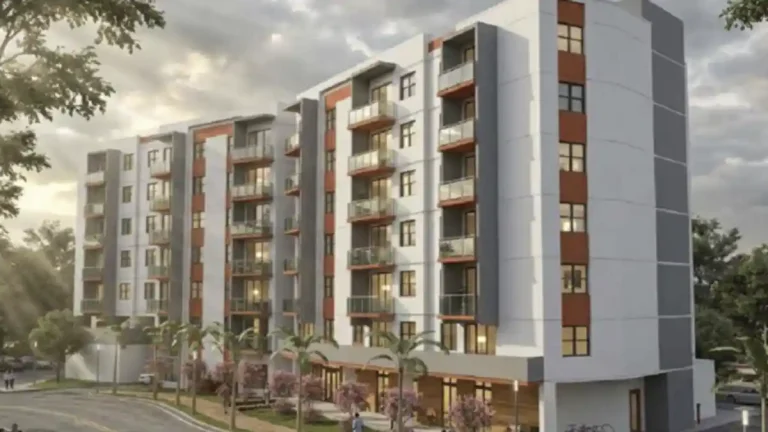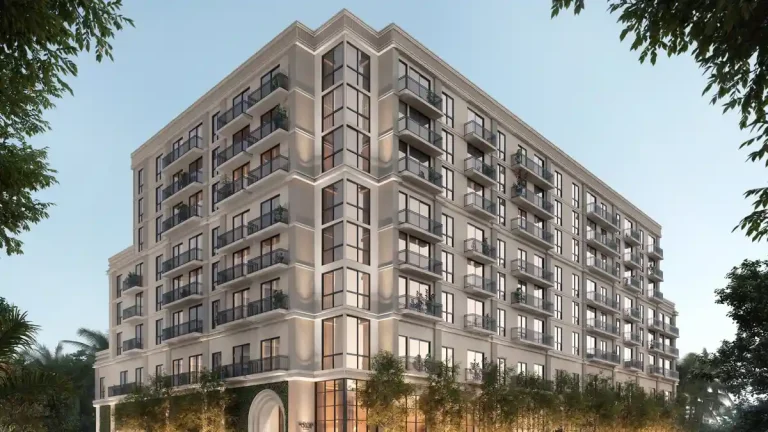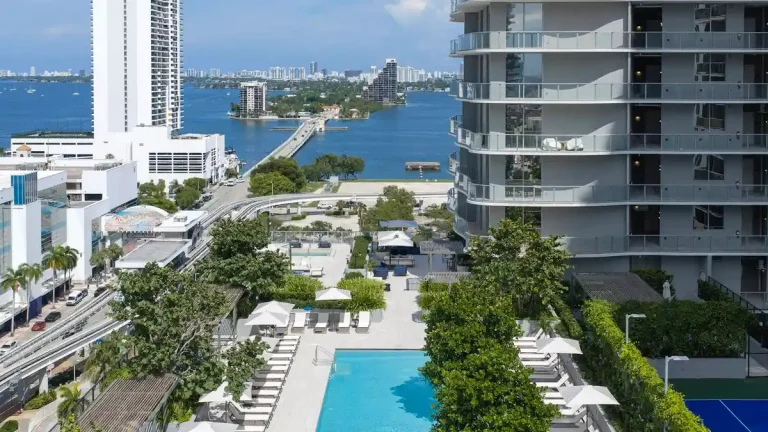
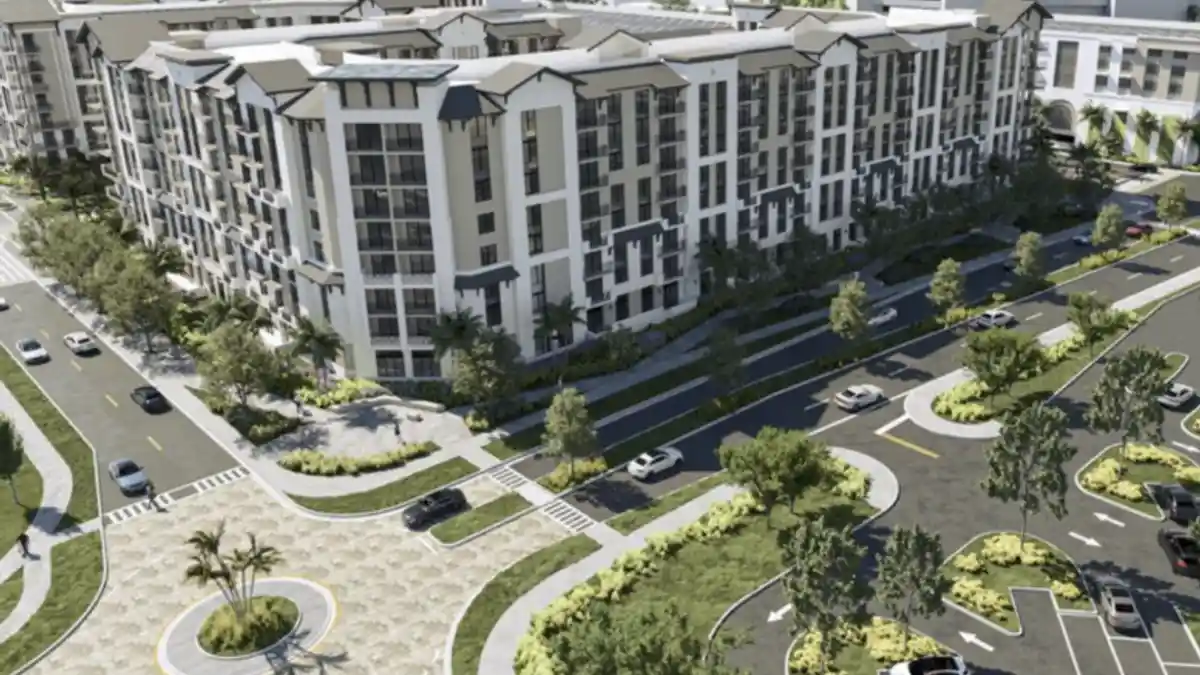
On October 20, Miami-Dade County commissioners reviewed plans for an 800-unit residential development at 9250 W. Flagler St. in West Miami-Dade, a project that would add a major multifamily component to the county’s West Dade Government Center redevelopment site. The proposal comes from Flagler TOC Development Partners and calls for two eight-story buildings built in phases.
The development would be constructed on part of the county-owned site at 9250 W. Flagler St., where the county purchased an office building for $182 million in 2024. The residential component would occupy 5.85 acres within the larger 19.8-acre government center redevelopment area, with the housing planned for the office building’s parking lot.
Also read: Redland Crossing Senior Living Moves to Pre Application · The Royal Palm at Crosswood Plans 2027 Groundbreaking
The proposal is notable because it pairs workforce-oriented and market-rate apartments on a public-sector site in one of western Miami-Dade’s more established commercial corridors. If advanced, the plan would turn underused parking acreage into a dense residential project near county facilities, retail, and major arterial road access.
| Project Detail | Information |
|---|---|
| Project | 9250 W. Flagler St. residential development |
| Location | 9250 W. Flagler St., Miami, Florida 33174 |
| Developer | Flagler TOC Development Partners |
| Architect | Modis Architects |
| Proposed Unit Count | 800 apartments |
| Building Height | Two eight-story buildings |
| Site Area | 5.85 acres within a 19.8-acre redevelopment area |
| Project Type | Phased multifamily development |
What is planned for 9250 W. Flagler St.
The current concept calls for two eight-story residential buildings with a combined total of 800 apartments. The project would be developed in two phases, according to reporting on the commission discussion.
The unit mix is designed with an income-restricted and workforce component alongside higher-income housing. The South Florida Business Journal reported that the proposal includes 40 apartments for households earning 80% of area median income, 40 apartments for households earning 100% of area median income, 20 apartments for seniors earning 100% of area median income, and 200 apartments for households earning 120% of area median income, with a preference for government employees. The remaining 500 apartments would also be for households earning 120% of area median income.
That structure suggests the project is being positioned in part as a mixed-income housing development, with a portion of the supply reserved for households below traditional market-rate thresholds. Miami-Dade has been under pressure to expand housing options across a range of income levels, especially near transit, employment centers, and public land assemblages.
Who is behind the project
Flagler TOC Development Partners is described as a venture made up of multiple entities, including representatives of UniCapital, Desarrollo Florida, the Florida Transportation Commission, and GLV Development Ventures. The architectural work is being handled by Modis Architects, a Miami-based firm.
The project team has not publicly disclosed a detailed construction timeline in the reporting reviewed, and no completion date was identified in the county commission coverage. At this stage, the proposal appears to be in the public-review and negotiation phase rather than the active construction phase.
The use of a county-owned site also makes the project particularly relevant from a public-policy standpoint. Unlike a privately assembled land purchase, the development depends on Miami-Dade’s willingness to move forward with a land-use and leasing framework that would allow housing to be built on property tied to the West Dade Government Center redevelopment.
How the West Dade Government Center site is being used
The housing plan is part of the broader West Dade Government Center redevelopment project, which spans 19.8 acres. The apartments would sit on 5.85 acres of that larger site, specifically in the office building’s parking lot.
That land use detail is important because it shows the project is not a standalone greenfield tower plan. Instead, it is a density proposal tied to an already built government complex, where the county has an incentive to make better use of parking and excess surface area. In many South Florida redevelopment efforts, surface parking has become one of the first targets for infill housing because it can support new units without requiring large-scale demolition.
Miami-Dade’s purchase of the office building for $182 million in 2024 underscores the county’s broader control over the site and helps explain why the parcel is being discussed as part of a long-range public redevelopment strategy. The plan would insert housing into a civic campus that already functions as a major county employment and service destination.
Why the unit mix matters
The proposed distribution of units provides an early look at how the project may be structured to satisfy both housing-demand and policy goals. The inclusion of apartments targeted to 80%, 100%, and 120% of area median income indicates that the development may be intended to serve households that earn too much for deeply subsidized housing but still struggle to qualify for much of Miami-Dade’s market-rate inventory.
The reported preference for government employees among some of the 120% AMI units also suggests the county may be looking at the project as a way to support workforce housing for public-sector workers. That type of allocation has become increasingly relevant in South Florida, where housing costs continue to outpace salaries for teachers, county staff, first responders, and other middle-income workers.
The remaining market-oriented portion of the plan would still be priced as housing for households earning up to 120% of area median income, which places the project in a category often referred to as workforce housing rather than luxury multifamily development. No pricing, rent schedule, or deposit structure was publicly released in the reporting reviewed.
Public review and next steps
The county commission hearing on October 20 indicates the proposal is moving through the public process, but the available reporting does not describe final approval, a binding lease execution, or a construction start. For now, the project should be understood as a proposed development under county consideration.
What comes next will likely depend on further county action related to land use, leasing, and project terms. Because the site is publicly owned and part of a broader government center redevelopment, county officials are likely to weigh not just the housing count but also phasing, parking implications, compatibility with surrounding government uses, and the mix of affordable and workforce units.
For readers tracking South Florida development, the project is a reminder that some of the region’s largest housing opportunities may come not from private land assembly, but from public agencies reworking oversized civic campuses and parking fields into mixed-use districts.
Why the project is relevant to South Florida real estate
West Miami-Dade has long been defined more by institutional and suburban commercial uses than by large-scale residential towers. A proposal for 800 apartments at 9250 W. Flagler St. therefore represents a meaningful shift in land use intensity for the area, particularly because it would add a large concentration of housing to a county-controlled site near major transportation corridors.
The project also reflects a broader regional trend: local governments and public authorities increasingly looking to their own land holdings as a way to address housing shortages. In Miami-Dade, where developable land is limited and prices remain elevated, underutilized public property can become a strategic source of new multifamily supply.
If the plan advances, the West Dade Government Center site could become a case study in how county-owned land is repurposed for housing without displacing existing civic functions. The result would be a more layered development model, with government operations, parking, and residential uses overlapping on the same campus.
Frequently asked questions
Where is the proposed 800-unit project located?
The project is planned for 9250 W. Flagler St. in Miami, Florida 33174, on part of the West Dade Government Center redevelopment site.
Who is developing the project?
The proposal comes from Flagler TOC Development Partners, a venture that includes representatives of UniCapital, Desarrollo Florida, the Florida Transportation Commission, and GLV Development Ventures.
How many units are planned?
The current proposal calls for 800 apartments across two eight-story buildings.
Is the project approved?
No final approval was identified in the reporting reviewed. The plan was heard by Miami-Dade County commissioners on October 20 and appears to remain under review.
What type of housing is included?
Reported unit allocations include apartments for households at 80% AMI, 100% AMI, and 120% AMI, including a portion reserved for seniors and a preference for government employees in some units.